
By David Murchland - Marshfield Now!
MARSHFIELD, Wis. — As February marks American Heart Month, two Marshfield Clinic cardiologists are highlighting advanced procedures now available in central Wisconsin, allowing patients to receive complex cardiac care close to home.
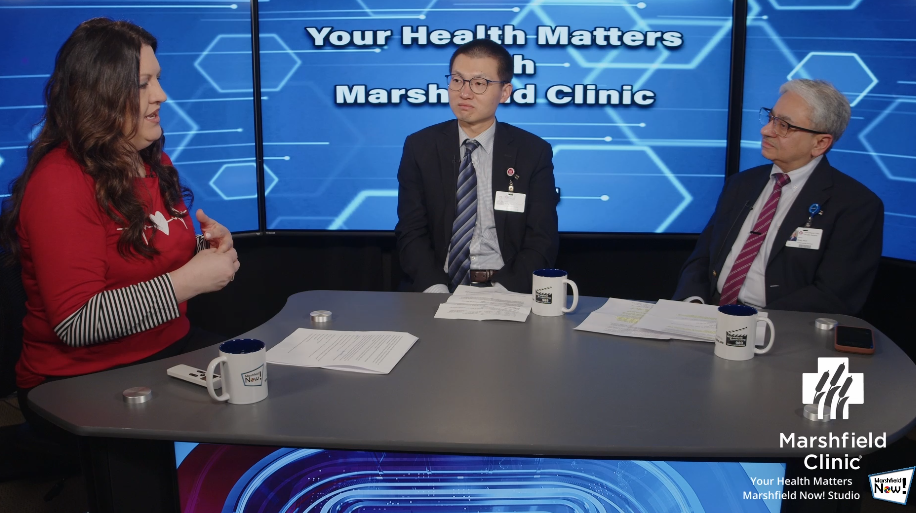
Dr. Shah, an interventional cardiologist, and Dr. Wang, a cardiac electrophysiologist, say advancements in minimally invasive techniques have transformed the way heart disease and heart rhythm disorders are treated in the region.
Shah, who has practiced at Marshfield Clinic for 25 years, specializes in restoring blood flow in blocked arteries and repairing heart valves using catheter-based procedures that often eliminate the need for open-heart surgery.
“We provide 24-7 coverage for acute heart attacks,” Shah said. “Within 30 minutes, we are in the procedure room, opening the artery and restoring blood flow to prevent further damage.”
Among the procedures Shah performs are coronary angiograms and stent placements, catheter-based aortic valve replacement, mitral and tricuspid valve repairs, and implantation of a device designed to reduce stroke risk in patients with atrial fibrillation who cannot tolerate blood thinners. The clinic also offers ECMO (extracorporeal membrane oxygenation) support for patients with severe heart failure.
“These are minimally invasive techniques, without opening the chest,” Shah said. “Our motto has been that every heart deserves world-class care locally.”
Wang focuses on the heart’s electrical system, diagnosing and treating abnormal rhythms that can cause dizziness, fainting, palpitations or sudden cardiac arrest.
“If the heart is beating too slow, we can implant a pacemaker,” Wang said. “If it’s beating dangerously fast, we use a defibrillator to reset the rhythm.”
Pacemakers are typically implanted beneath the collarbone with leads that monitor the heart continuously. Newer versions can be placed entirely inside the heart without traditional wires. Defibrillators deliver a controlled shock to restore normal rhythm in life-threatening situations.
Wang also performs cardiac ablations, minimally invasive procedures that target abnormal electrical pathways in the heart. Many patients return home the same day.
Both physicians emphasized the importance of collaboration when determining treatment plans. Cardiologists and cardiovascular surgeons review complex cases together to decide the best course of care.
“Some scenarios are better treated with surgery, others with intervention,” Shah said. “It depends on the patient.”
Despite technological advances, both doctors stressed prevention as the most important tool in protecting heart health. They encourage patients to maintain a healthy diet, exercise regularly, manage stress, avoid tobacco and seek medical attention for warning signs such as chest pain or shortness of breath.
“Listen to your body,” Wang said. “Catching problems early can make a critical difference.”
As Heart Month continues, the physicians say they hope greater awareness will encourage residents to take proactive steps to protect their heart health — and to know advanced cardiac care is available close to home